There are no items in your cart
Add More
Add More
| Item Details | Price | ||
|---|---|---|---|

Or you just tried to exclude an audience category only to realize Meta would not let you do it? It just feels like everything that you knew about targeting and Meta is suddenly upside down, right? If you have ever tried running ads or actively running Meta ads, you surely know that these changes can make a big difference to your final results.
Meta has rolled out some new targeting rules for everyone, whether you are just a newbie in this field or an experienced pro.
These changes are important for everyone. In this blog, we will break down what the new targeting updates are, how they work, what impact they actually make, and finally, what steps you need to take to make your campaigns perform their best.
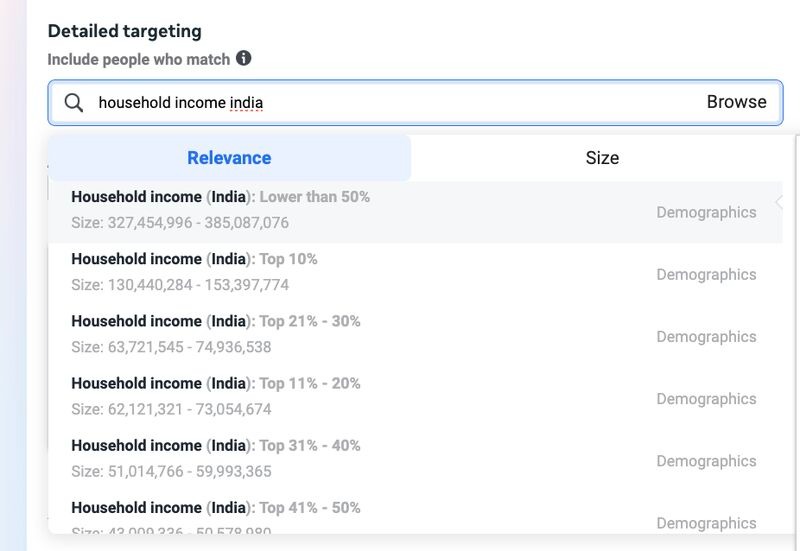
Alongside income-based audience targeting, Meta has also updated niche targeting. Many of the hyper-specific interests that people have chosen and relied on for a very long time are being removed or merged now.
Earlier, meta allowed you to laser-focus on very narrow audiences is now broader, pushing advertisers to rethink with a creative approach.
Now, let's talk about the exclusion update rules in meta. Earlier, you could easily exclude a certain group of audience at the ad set level. For example, you can exclude your existing customers, audiences who recently engaged with your page, or a group of people from a specific demographic area.
But now, after the new updates, these precise exclusions are limited, making it much more difficult to avoid wasted impressions.
While I could dive deeper here, I’ve already covered - How to Automatically SCALE your Facebook ADS? 🔥 (FREE GUIDE*) in one of my previous YouTube videos.
This simply means that now you have to learn in depth about custom audiences and layered targeting to maintain precision and make sure that your ads do not end up in front of the unwanted audience.
And the last but not least update is, meta continues to force and push the advertisers towards their AI-driven campaigns like Advantage+, where the platform itself decides the best audience for your ads and automatically selects budgets, placement, targeting, and other things.
Sometimes you may feel that this automation will help you save your time as well as your money. Just sitting, relaxing, and letting the AI do all the work, right? But here’s the scary part: if you don’t guide it properly and feed your earlier data, your budget could vanish while the results stay flat.
It only works best when tried and tasted with the manual insight alongside testing with different audiences, creatives, placement, and messaging to make sure the AI has your accurate data to learn and optimize from.
Blindly trusting in AI automation without understanding your audience first can ultimately lead you towards a waste of time and money, even with these advanced AI tools.
READ MORE: Facebook Ads Vs Google Ads: Which Delivers Better ROI?
Well, at the end of the day, all these new updates, whether it's income-based targeting, change to niche targeting, exclusion limitations, and the AI advantage+push, all are redesigning how advertisers need to think about Meta ads.
The campaigns that will actually succeed are the ones where people learn, try & test, adapt, and combine strategy with new tools and creatives.
Understanding who your audience is one of the most important things, alongside using income targeting wisely, keep experimenting with broader segments, and carefully integrating AI use can help you gain a lot of profit, actually.
Meta Ads will keep evolving from time to time, but the actual winning advertisers will be those who keep experimenting, stay curious, test, and use different strategies over pure luck.

DAMINI TRIPATHI
Damini Tripathi, rocking the digital marketing scene for 5 awesome years. Started from scratch, now running my digital marketing agency and creating cool content too. She has been one of the fastest-growing digital marketers on the internet. Damini has also scaled multiple clients from ZERO —> HERO.